
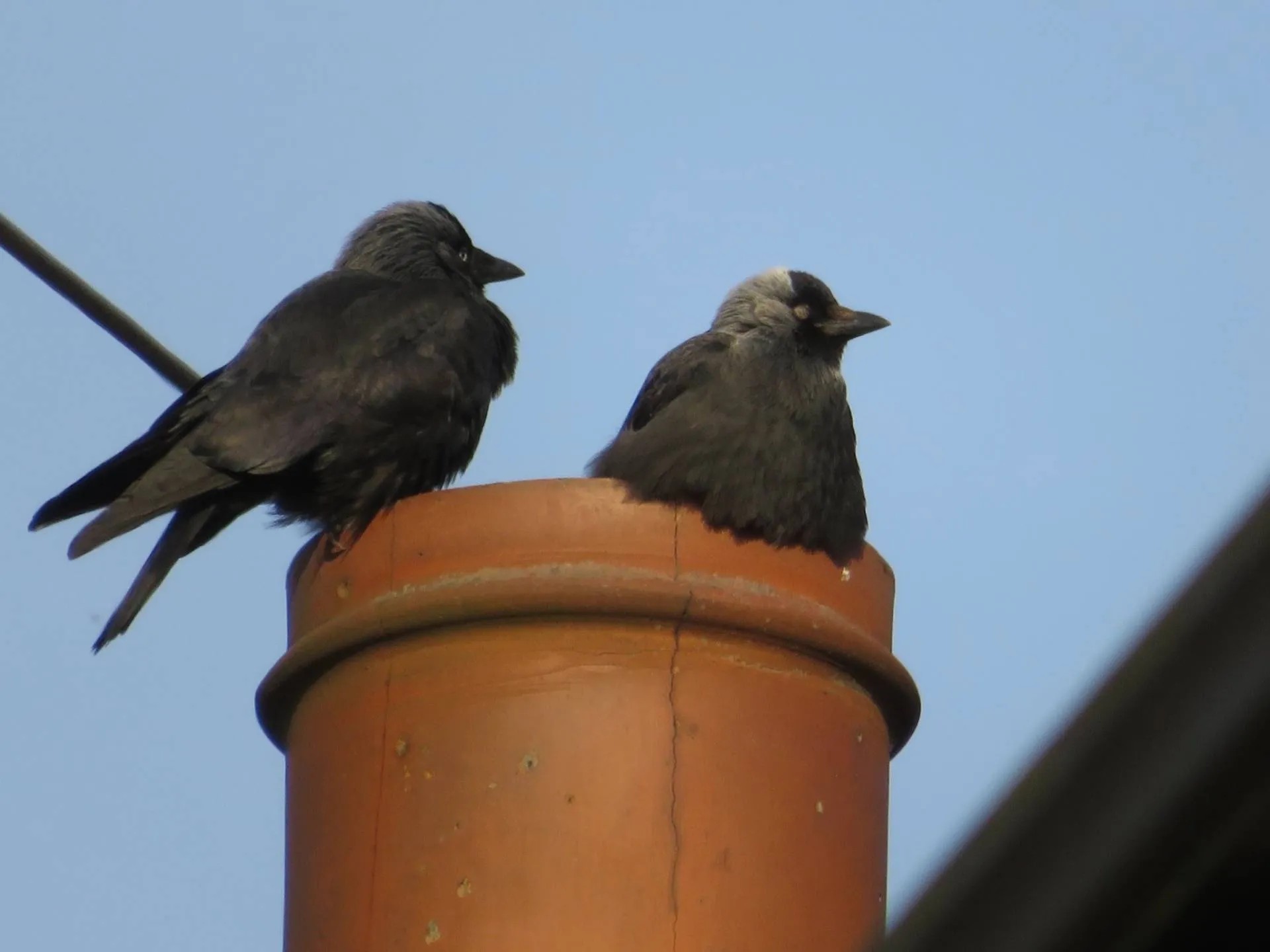
Each spring, Jackdaws and other birds look for sheltered places to build their nests. Chimney flues across Bedfordshire, Buckinghamshire, Hertfordshire and Northamptonshire are common targets. While it may seem harmless, a nest inside a chimney is a serious safety hazard.
1. Carbon Monoxide Risk
A blocked flue prevents smoke and gases from escaping. If a fire is lit beneath a nest, dangerous Carbon Monoxide (CO) can be forced back into the room. CO is colourless, odourless and potentially fatal. This is why a chimney should always be checked before first use each autumn.
2. Increased Fire Hazard
Bird nests are made from highly flammable materials such as twigs, straw, leaves and wool. In rural areas of Northamptonshire and Buckinghamshire, these materials are abundant. If ignited, a nest can cause an intense chimney fire capable of damaging the flue or spreading to the property.
3. Damp and Infestations
Nests trap moisture inside the chimney, which can lead to damp patches on internal walls. They can also harbour insects such as mites, beetles and flies, creating additional problems inside the home.
If you notice birds gathering around your chimney pot or find twigs in your fireplace, avoid using the appliance. A professional inspection is the safest option.